
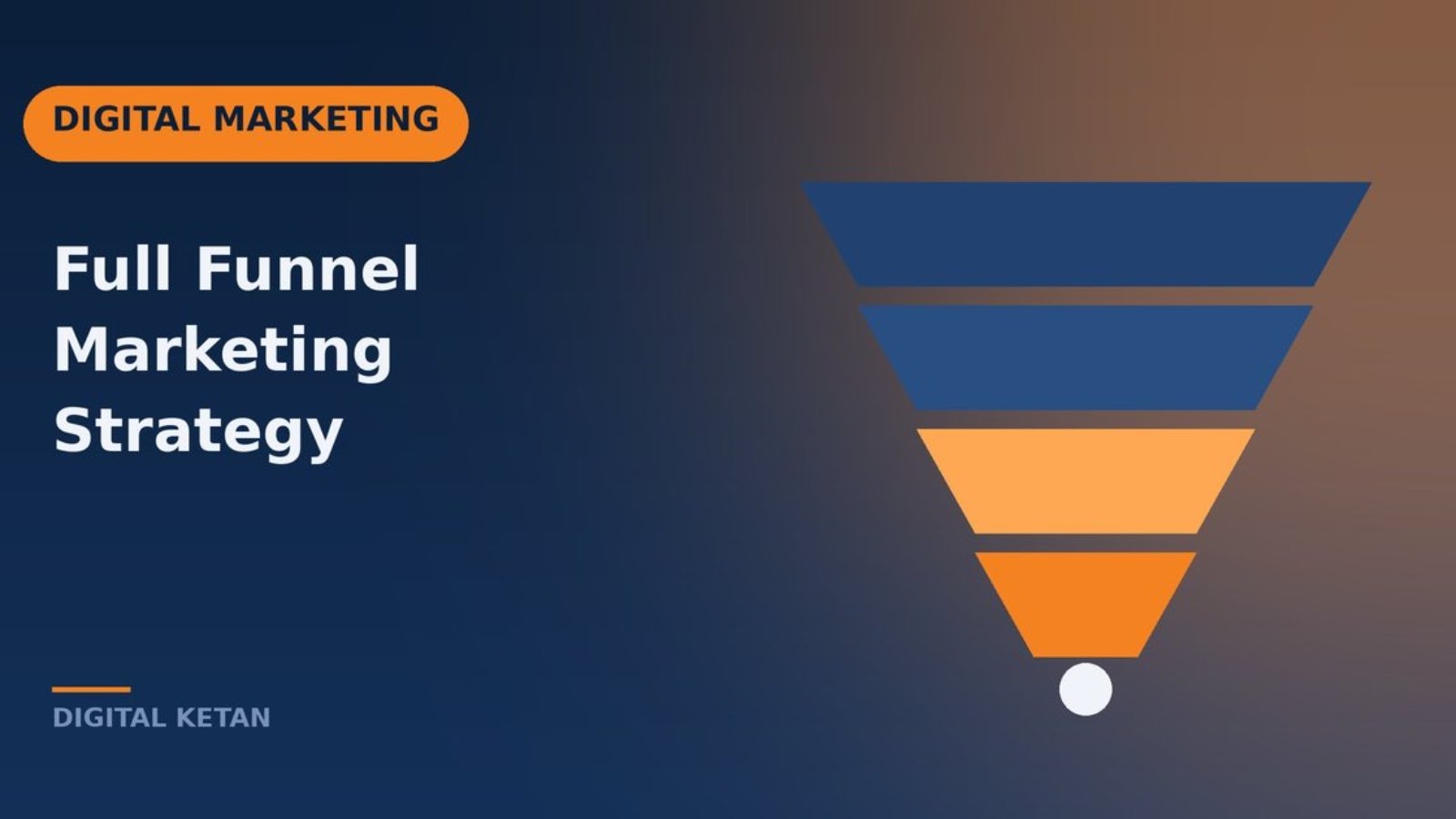
A full funnel marketing strategy plans marketing activity for every stage of the buyer’s journey, from first becoming aware of a problem or brand, through considering options, to converting and becoming a loyal customer. Instead of relying on one tactic, such as ads that only target people ready to buy, it combines channels and messages that reach people at each stage and move them to the next. A practical full funnel plan usually has three main stages, often called top, middle and bottom of funnel, plus retention, with clear goals, channels, content and measures for each.
This guide is for business owners and marketers who want marketing that works as a connected system rather than a collection of separate activities. I will explain the stages of the funnel, which channels and content suit each stage, how to connect the stages, how to budget and measure, common mistakes, a practical example and a checklist. For broader planning, my guide to digital marketing strategy for small businesses covers the foundations.
What Is a Marketing Funnel?
A marketing funnel is a simple model of how people move from not knowing about you to becoming customers. At the top, many people become aware of a problem or of your business. Fewer move into consideration, where they compare options. Fewer again convert. After conversion, retention and advocacy turn customers into repeat buyers and sources of referrals.
Real journeys are rarely neat. People skip stages, go back and forth, and interact with many channels. The funnel is still useful because it reminds you that people need different things at different moments, and that a strategy focused on only one stage leaves gaps.
The Stages of a Full Funnel Strategy
Top of funnel: awareness
At the top, people may not know your business, and some may not yet realize they have the problem you solve. The goal is to reach relevant people and make a useful first impression.
- What people need: education, inspiration, recognition of a problem.
- Content: helpful articles, short videos, social posts, guides and insights.
- Channels: organic search for informational queries, social media, paid social awareness and video campaigns, PR and partnerships, and increasingly AI assistants that answer questions.
- Measures: reach, relevant traffic, new audience growth, video views and brand search trends.
Middle of funnel: consideration
In the middle, people know they have a problem and are evaluating solutions. The goal is to show that your approach fits their needs and to build trust.
- What people need: comparisons, detail, proof, answers to objections.
- Content: in depth guides, comparison articles, case studies, webinars, FAQs and demonstrations.
- Channels: organic search for comparison and solution queries, retargeting ads, email nurturing, and AI assistant recommendations.
- Measures: engaged visits, return visits, email sign ups, content downloads and retargeting audience size.
Bottom of funnel: conversion
At the bottom, people are ready to act. The goal is to make choosing you easy and low risk.
- What people need: clear offers, pricing or process information, reassurance and an easy next step.
- Content: service and product pages, pricing information, testimonials you have permission to use, guarantees and clear calls to action.
- Channels: search ads for high intent queries, organic rankings for buying keywords, retargeting, sales conversations and local search for nearby customers.
- Measures: leads, sales, conversion rate, cost per acquisition and revenue.
Retention and advocacy
After someone buys, the funnel continues. Retaining customers and encouraging referrals is often more cost effective than finding new customers.
- What people need: a good experience, helpful onboarding, ongoing value and reasons to return.
- Content: onboarding guides, tips, updates, loyalty offers and review requests.
- Channels: email, customer communities, account management and social media.
- Measures: repeat purchases, retention rates, reviews and referrals.
Matching Channels to Funnel Stages
Most channels can work at more than one stage, but each has natural strengths.
| Channel | Strongest stages | Role |
|---|---|---|
| SEO and content | Top, middle, bottom | Answers questions at every stage and builds long term visibility |
| Google Search ads | Bottom, middle | Captures people actively searching for solutions |
| Meta and social ads | Top, middle, bottom via retargeting | Creates demand and re-engages visitors |
| AI assistants and AI search | Top, middle | Shapes shortlists when people ask for recommendations |
| Middle, retention | Nurtures interest and keeps customers engaged | |
| Local search | Bottom | Connects nearby customers ready to act |
A sound SEO strategy covers informational, comparison and transactional searches, which is why organic search can support the whole funnel. Google Ads is strongest where intent is highest, while Meta Ads can introduce your business to people who are not yet searching and bring back people who have visited. AI visibility is becoming important in the early and middle stages, when people ask assistants to explain options or recommend providers. For local businesses, the practices in my local SEO guide are central to the bottom of the funnel.
Building Content for Each Stage
Content is what moves people from one stage to the next. A content marketing strategy built around the funnel makes sure each stage is served:
- Top: explain problems and ideas in plain language. Answer the questions people ask before they know which solution they need.
- Middle: compare approaches honestly, show how things work, share examples and address objections.
- Bottom: make offers, processes and pricing clear. Remove uncertainty about what happens next.
- Retention: help customers succeed with what they bought.
Link content across stages. An awareness article should point to a relevant comparison guide, and a comparison guide should point to a service page or consultation. These connections guide readers naturally.
Connecting the Stages
A full funnel strategy is more than running activities at each stage. The stages must be connected so people progress.
Retargeting
Retargeting shows relevant ads to people who visited your website, watched your videos or engaged with your content. It is one of the most effective ways to move people from awareness to consideration and from consideration to conversion. Match the message to what they have already seen.
Email capture and nurturing
Offering something useful in exchange for an email address, such as a checklist or guide, lets you continue the conversation. A short nurturing sequence can move people toward a decision.
Lead handling
When people do enquire, fast and helpful follow up is essential. My guide to Meta Ads lead generation covers how form design, follow up and quality feedback work together, and the same principles apply to leads from any channel.
Consistent messaging
People should recognize the same core message whether they see an ad, read an article or speak with your team. Consistency builds familiarity and trust.
Planning Your Full Funnel in Five Steps
- Map the real journey. Talk to recent customers and your sales team. Ask how people first heard of you, what they researched, what nearly stopped them and what made them decide. This reveals the questions and touchpoints that matter at each stage.
- Audit what you already have. List your existing content, campaigns and channels, and place each one in a funnel stage. Most businesses find gaps, often in the middle of the funnel, where comparison content, proof and nurturing are missing.
- Set one goal and a few measures per stage. Keep it simple. For example, grow relevant new visitors at the top, grow email subscribers and engaged visits in the middle, and grow qualified leads at the bottom.
- Fill the most important gaps first. Usually that means strengthening conversion pages and follow up, then adding middle of funnel content and retargeting, then expanding awareness.
- Review and adjust quarterly. Look at how people are moving between stages, which content and channels contribute, and where people drop off.
Messages That Fit Each Stage
| Stage | Question in the buyer’s mind | Example message focus |
|---|---|---|
| Awareness | What is causing this problem? | Explain the problem and why it matters |
| Consideration | What are my options and which fits me? | Compare approaches honestly and show how yours works |
| Conversion | Is this the right provider and is it safe to proceed? | Clear offer, process, proof and next step |
| Retention | Am I getting value, and what else can help? | Help customers succeed and suggest relevant next steps |
Budgeting Across the Funnel
Many businesses put almost all their budget into the bottom of the funnel because it produces the most measurable, immediate results. That can work for a while, especially when demand already exists. Over time, though, bottom of funnel activity only captures people who are already looking. Without awareness and consideration activity, the pool of people ready to buy may not grow.
There is no universal formula for splitting budget. A reasonable approach is to secure the bottom of the funnel first, making sure people ready to buy can find you and convert easily, then invest progressively in the middle and top as the business can support longer term activity. Review the balance regularly based on results and on how quickly your pool of engaged prospects is growing.
If you are deciding how to divide investment between organic and paid channels, my comparison of SEO vs Google Ads explains the trade offs.
Where People Drop Out of the Funnel
Finding where people leave the journey tells you where to focus. Common drop off points include:
- From awareness to consideration: people read an article or watch a video but never return. This often means there is no clear next step, no email capture and no retargeting.
- From consideration to conversion: people compare options but do not enquire. Common causes are missing pricing or process information, weak proof, unclear offers or forms that ask too much.
- From enquiry to sale: leads arrive but do not become customers. This usually points to slow follow up, poor lead quality or a mismatch between what marketing promises and what sales offers.
- From first purchase to repeat business: customers buy once and never return. Onboarding, follow up and ongoing value are often missing.
Use analytics, CRM data and conversations with customers and sales staff to identify the biggest leak, then fix that first. Improving one weak connection often does more than adding new activity at the top.
Measuring a Full Funnel Strategy
Each stage needs its own measures, because judging awareness activity by immediate sales will always make it look weak. Use stage appropriate indicators, such as reach and new visitors at the top, engagement and email sign ups in the middle, and leads, sales and cost per acquisition at the bottom.
Accurate conversion tracking connects the stages. Without it, you cannot see which activities contribute to results. My guide to Google Ads conversion tracking with GA4 explains how to set up reliable measurement, and GA4’s path and attribution reports help show how channels work together over time.
Also look at leading indicators of future growth, such as branded search volume, direct traffic, the size of retargeting audiences and email list growth. These often rise before sales do.
Full Funnel Approaches for Different Businesses
Local service businesses
For local businesses, the funnel is often short. Many customers search when they already need help, so the bottom of the funnel, including search ads, local search visibility and reviews, carries a lot of weight. Awareness activity, such as local social content and community involvement, helps people remember your name when the need arises. Retention and referrals are powerful because satisfied local customers talk to neighbors.
Ecommerce
Ecommerce funnels often move quickly for low cost products and slowly for considered purchases. Social and video content creates demand, product comparison content and reviews support consideration, and retargeting and email recover people who browse without buying. Post purchase emails encourage repeat orders.
B2B and high value services
B2B funnels are longer and involve several people. The middle of the funnel matters most: detailed guides, comparisons, case studies and nurturing sequences that help buyers build a case internally. Sales and marketing need to share information about lead quality so marketing can focus on the prospects that become customers.
Common Full Funnel Mistakes
- Spending only on the bottom of the funnel and wondering why growth stalls.
- Judging awareness campaigns by immediate sales.
- Creating top of funnel content with no path to the next stage.
- Running retargeting with the same message people have already ignored.
- Ignoring retention and referrals.
- Inconsistent messaging across channels.
- Weak tracking that makes it impossible to see how stages connect.
- Slow follow up that wastes leads generated at the bottom of the funnel.
Practical Example: A Kitchen Design Company
This is an illustrative example to show the process, not a real client case.
Imagine a kitchen design company that relies entirely on Google Search ads for people searching “kitchen designers near me.” The ads produce enquiries, but costs are rising and the number of people searching seems fixed.
The company builds a full funnel plan. At the top, it publishes practical guides about planning a kitchen renovation, choosing layouts and understanding materials, and shares short videos of its own projects on social media. It runs a modest paid social campaign to promote these to homeowners in its area.
In the middle, it creates comparison content, such as the pros and cons of different worktop materials, and a downloadable planning checklist that captures email addresses. A short email sequence shares project examples and explains the design process. Retargeting ads show visitors a message about booking a design consultation.
At the bottom, the company keeps its Google Search ads, improves its service pages with clear process and pricing guidance, and strengthens its local search presence with reviews and accurate business information. After installation, customers receive care guides and a request for a review.
The company measures each stage separately, watching guide traffic and checklist sign ups alongside consultations and sales. The example shows how activities at different stages feed each other rather than competing for budget.
Full Funnel Marketing Checklist
- The buyer journey from awareness to retention is mapped.
- Goals and measures are defined for each stage.
- Content exists for awareness, consideration, conversion and retention.
- Channels are chosen for their strengths at each stage.
- Content links guide readers to the next stage.
- Retargeting is set up with stage appropriate messages.
- Email capture and nurturing are in place.
- Lead follow up is fast and structured.
- Messaging is consistent across channels.
- Conversion tracking connects channels and stages.
- Budget covers the bottom of the funnel first, then builds upward.
- Leading indicators such as brand search and audience growth are tracked.
Frequently Asked Questions
What is full funnel marketing?
It is an approach that plans marketing for every stage of the buyer journey, from awareness to consideration, conversion and retention, and connects those stages so people progress.
Do small businesses need a full funnel strategy?
Yes, though it can be simple. Even a small business benefits from helpful content, a way to stay in touch with interested people, clear conversion pages and a plan for repeat business.
Which funnel stage should I invest in first?
Usually the bottom, making sure people ready to buy can find you and convert easily. Then build the middle and top to grow future demand.
How do I measure top of funnel marketing?
Use stage appropriate measures such as reach, new visitors, engagement, audience growth and branded search trends, rather than immediate sales.
Is the marketing funnel still relevant with AI search?
Yes. AI assistants add new touchpoints, especially in awareness and consideration, but people still move from learning to comparing to deciding. Being visible in AI answers is part of a modern full funnel approach.
How long does a full funnel strategy take to show results?
Bottom of funnel improvements can show results quickly. Awareness and consideration activity usually takes months to build, but it supports more sustainable growth.
What role does email play in the funnel?
Email is especially valuable in the middle and retention stages, nurturing interested prospects and keeping customers engaged at low cost.
Is full funnel marketing only for large budgets?
No. Small businesses can build a full funnel with modest activity at each stage, such as a few helpful articles, an email list, retargeting and clear service pages. The principle is connection, not scale.
Conclusion
A full funnel marketing strategy recognizes that people need different things at different stages, and that growth comes from connecting those stages. Reach relevant people with helpful content, support them as they compare options, make conversion easy, and keep customers engaged after they buy. Use channels for their strengths, connect the stages with retargeting, email and fast follow up, and measure each stage on its own terms.
Businesses that only capture existing demand eventually hit a ceiling. Those that also create and nurture demand build a pipeline that keeps growing.
Want a Marketing Plan That Covers the Whole Journey?
If your marketing relies on one channel or one stage, I can help you map your buyer journey, choose the right channels for each stage and connect SEO, paid ads, AI visibility, content and tracking into one strategy. Contact me through DigitalKetan.com to discuss your full funnel plan.
[…] It shapes decisions about budget, channel mix and content, and it is especially important for a full funnel marketing strategy, where awareness and consideration activities rarely receive credit under simplistic […]