
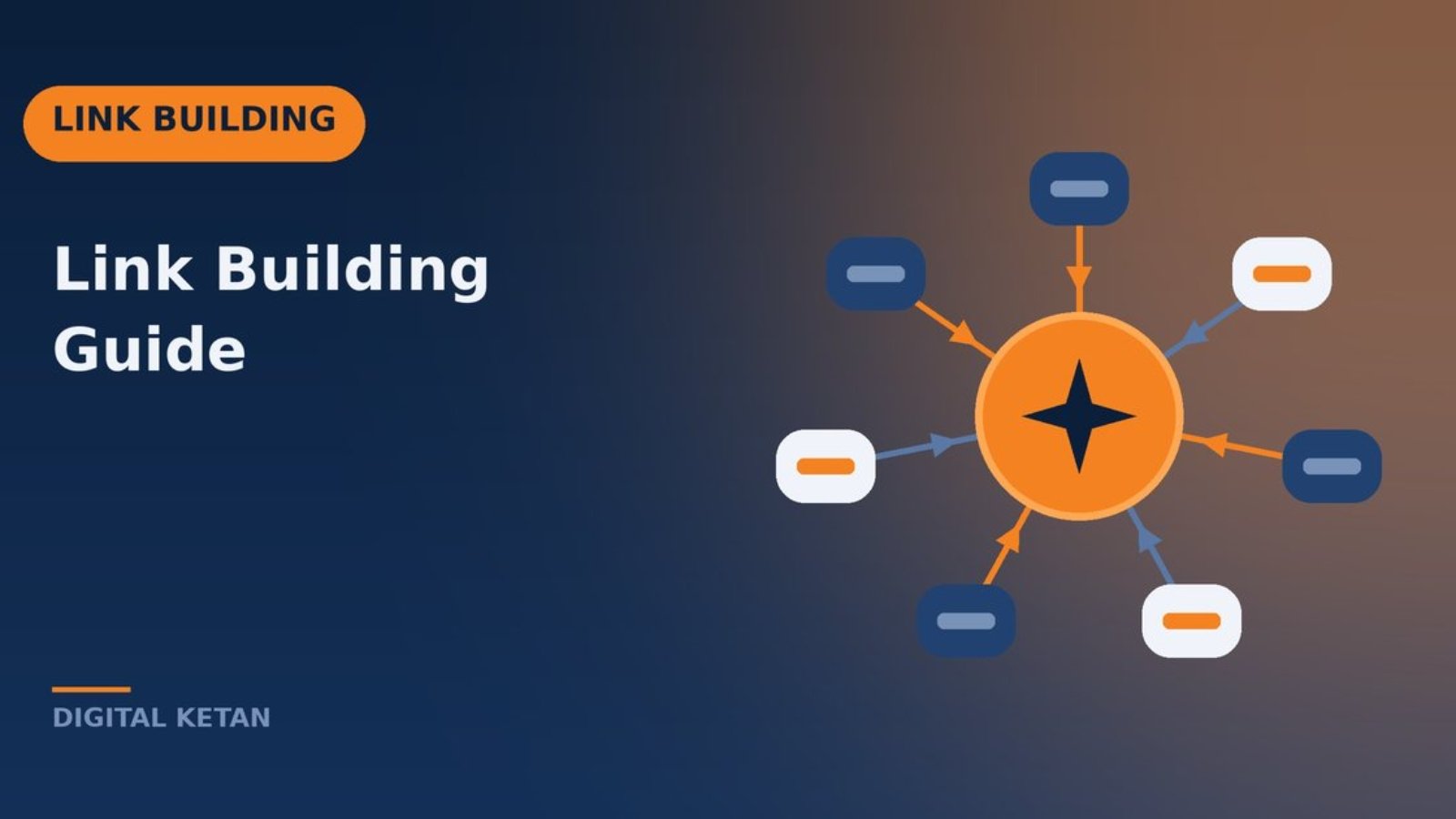
Link building is the process of earning links from other websites to your own. These links, often called backlinks, act as signals of trust and relevance: when reputable sites reference your content, search engines treat it as evidence that your pages are credible and worth ranking. Effective link building in 2026 is less about collecting as many links as possible and more about earning genuine references from relevant, respected sources through useful content, real relationships, and newsworthy work. Those same references also help AI systems understand which brands are trusted in a category.
This guide is for business owners and marketers who want to build authority without risky shortcuts. I will explain what link building is, why links still matter, how search engines evaluate links, practical strategies that work for small and mid sized businesses, the tactics to avoid, a realistic example, and a checklist. Link building is one pillar of a broader plan, which I describe in my SEO strategy guide.
What Is Link Building?
A backlink is a hyperlink on another website that points to a page on your site. Link building is the set of activities designed to earn those links. Some links come naturally when people find your content useful. Others come from deliberate outreach, partnerships, public relations, or listings in relevant directories and associations.
Links matter because they are one of the ways search engines judge authority. Google’s original PageRank system was built on the idea that a link is a vote of confidence, and although modern ranking systems use many more signals, links from trusted, relevant sites remain influential. Google has also said that it has become better at identifying and ignoring manipulative links, which is why quality matters far more than quantity.
Link building is closely related to digital PR and brand building. The most valuable links usually come from being genuinely worth mentioning: publishing original insight, doing interesting work, helping journalists, or building useful resources.
Why Does Link Building Matter in 2026?
Authority for rankings
In competitive markets, content quality alone is often not enough. When several pages cover a topic well, authority signals help decide which ranks higher. Sites with a strong, relevant link profile tend to rank more easily for new content too.
Discovery
Search engines discover pages by following links. Links from frequently crawled sites help new content get found faster.
Referral traffic and brand exposure
A link in a well read industry publication brings visitors directly, and many of them are exactly the kind of people you want to reach. It also builds brand familiarity, which supports every other channel.
AI visibility
AI systems look for corroboration from multiple credible sources when deciding what to say about a brand or topic. Mentions and links in respected publications, directories, and communities help AI assistants understand who is trusted in your space. This is why link building and digital PR have become central to generative engine optimization and to broader AI visibility. Even unlinked brand mentions contribute to that picture.
How Search Engines Evaluate Links
Not all links are equal. These factors influence how much a link is likely to help.
Relevance
A link from a site in your industry or a closely related field is generally more valuable than a link from an unrelated site. A link to an accounting firm from a small business publication makes sense; a link from a gaming blog does not.
Authority and trust
Links from well established, trusted websites carry more weight than links from new or low quality sites. Third party metrics such as Ahrefs’ Domain Rating or Semrush’s Authority Score are useful approximations, but they are not Google’s metrics. Judge sites by whether real people read and trust them.
Editorial context
A link placed within relevant content by an editor who chose to reference you is much more valuable than a link in a footer, a sitewide blogroll, or an auto generated page.
Anchor text
The clickable text of a link helps describe the destination. Natural link profiles contain a mix of brand names, URLs, and descriptive phrases. An unnatural concentration of exact match keyword anchors can look manipulative.
Link attributes
Links marked with rel=”nofollow”, rel=”sponsored”, or rel=”ugc” signal to Google that the link should not pass ranking credit in the usual way. Google treats these as hints. Sponsored and paid links must carry the appropriate attribute. Nofollow links can still bring traffic, exposure, and brand mentions that matter for AI understanding.
Link Building Strategies That Work
These are the approaches I use most often with clients. They focus on earning links that would make sense even if search engines did not exist.
Create linkable assets
A linkable asset is content that others want to reference: original research, industry surveys, data analysis, detailed guides, calculators, templates, or clear explanations of complex topics. The best assets fill a gap: information your industry needs but cannot easily find. Use keyword research and conversations with customers to identify those gaps.
Digital PR and expert commentary
Journalists and editors constantly need expert sources. Respond to relevant media requests through services such as Qwoted, Featured, or similar platforms, pitch genuinely newsworthy stories from your data or experience, and build relationships with writers in your industry. Expert commentary often earns links and mentions from publications that would otherwise be hard to reach.
Industry directories and associations
Membership listings in professional associations, chambers of commerce, certification bodies, and respected industry directories provide relevant, trustworthy links. They also reinforce consistent business information across the web. Focus on directories that real buyers use, not generic link directories.
Partners, suppliers, and customers
Businesses you work with often have partner pages, supplier lists, integration directories, or case study sections. Ask to be included where the relationship is real. Software integrations, certified partner programs, and joint case studies are especially natural sources of links.
Guest contributions to respected publications
Writing genuinely useful articles for publications your audience reads can earn exposure and a link, typically in an author bio. The value comes from the audience, not the link alone. Avoid sites that publish anything from anyone in exchange for a fee; those links carry little value and some risk.
Broken link and resource page outreach
Find relevant resource pages or articles that link to content that no longer exists, and suggest your equivalent resource as a replacement. This works when your content is genuinely a good fit and the outreach is polite and personalized.
Unlinked brand mentions
Monitor mentions of your brand with tools such as Google Alerts, Ahrefs, or Brand24. When a site mentions you without linking, a friendly request to add a link is often successful because the editor has already chosen to reference you.
Local and community involvement
Sponsoring local events, supporting charities, speaking at meetups, and partnering with community organizations earn relevant local links and genuine goodwill. These links are especially useful for local businesses.
Podcasts and events
Appearing on podcasts, webinars, and conference programs usually results in show notes or speaker pages that link to your site. It also builds credibility that supports sales conversations.
Link Building Strategies Compared
| Strategy | Effort | Typical link quality | Best for |
|---|---|---|---|
| Original research and data | High | High | Businesses with data or survey access |
| Expert commentary and digital PR | Medium | High | Experienced founders and specialists |
| Directories and associations | Low | Medium | All businesses, especially local and B2B |
| Partner and supplier links | Low | Medium to high | B2B and software companies |
| Guest contributions | Medium | Medium | Consultants and service firms |
| Broken link outreach | Medium | Medium | Sites with strong resource content |
| Unlinked mentions | Low | Medium to high | Brands already getting coverage |
A Link Building Process: Step by Step
Step 1: Get your own site ready
Links point to pages, so those pages must deserve them. Make sure your key pages are well written, technically sound, and properly optimized. A technical SEO audit and a review against an on-page SEO checklist are good starting points.
Step 2: Analyze your current link profile
Use Ahrefs, Semrush, or Search Console’s Links report to see who links to you now, which pages attract links, and what anchor text is used. Look for patterns and any low quality links that might need attention.
Step 3: Study competitors
Review the links your stronger competitors have earned. Look for directories, associations, publications, and partners that could reasonably link to you too. Competitor analysis often reveals obvious opportunities you have missed.
Step 4: Choose strategies that fit your strengths
A founder with deep expertise might focus on commentary and guest contributions. A company with customer data might focus on original research. A local business might focus on associations, sponsorships, and community partnerships. Pick two or three approaches you can sustain.
Step 5: Build assets and relationships
Create the content or resources you will promote, and start building relationships with relevant editors, partners, and community organizations. Relationships make outreach easier and more successful over time.
Step 6: Reach out thoughtfully
Personalize every outreach message. Explain why your resource or expertise is relevant to their audience, keep it short, and make it easy to say yes. Avoid mass templates.
Step 7: Connect earned links to important pages
Links often land on guides and research rather than service pages. Use a strong internal linking strategy to pass that authority to the pages that matter commercially.
Step 8: Track results
Track new referring domains, the quality of those domains, referral traffic, rankings for target pages, and brand mentions. Evaluate over months, because link building effects accumulate gradually.
Tactics to Avoid
Google’s spam policies prohibit link schemes designed to manipulate rankings. These tactics carry real risk and usually deliver little lasting value:
- Buying links that pass ranking credit. Paid links must be marked as sponsored or nofollow.
- Private blog networks. Networks of sites built only to link to each other or to clients are a well known spam pattern.
- Excessive link exchanges. Agreements to swap links purely for ranking purposes are against guidelines.
- Automated link building. Software that creates links in comments, forums, or profiles produces spam.
- Low quality guest posting at scale. Publishing thin articles on sites that accept anything, mainly for the link, is treated as a link scheme.
- Keyword rich anchors everywhere. Forcing exact match anchors across many links looks unnatural.
How to Judge a Link Opportunity
Before investing time in any opportunity, ask a few practical questions. Would you want this link even if it passed no ranking value, because the site’s audience includes your buyers? Does the site publish content people actually read, or does it exist mainly to sell links? Is the site topically related to your business or your customers’ industry? Would the link sit within relevant editorial content rather than in a list of unrelated links? And does the site have real traffic, which tools such as Ahrefs and Semrush can estimate?
If most answers are yes, the opportunity is probably worth pursuing. If the main appeal is a high authority score on an otherwise irrelevant site, it probably is not.
Dealing With a Poor Link History
Many businesses inherit link profiles from previous agencies that bought links, joined networks, or used automated tools. Google has said it tries to ignore spammy links rather than penalize sites for them, so most businesses do not need to take dramatic action. The exception is when a site has received a manual action for unnatural links, which appears in the Manual Actions report in Search Console.
If you have a manual action, identify the manipulative links, request removal where possible, and use Google’s disavow tool for links you cannot remove, then submit a reconsideration request explaining what you did. If you do not have a manual action, disavowing is rarely necessary, and disavowing good links by mistake can do more harm than good. In most cases, the best response to a weak link history is to stop the bad practices and start earning genuine links.
Common Link Building Mistakes
- Chasing metrics instead of relevance. A high authority score means little if the site has no connection to your industry.
- Promoting pages that do not deserve links. Outreach for thin service pages rarely succeeds.
- Generic outreach. Template emails are ignored and can damage your reputation.
- Stopping too soon. Relationships and authority take months to build.
- Ignoring mentions without links. Brand mentions still support credibility and AI understanding.
- Not connecting links to commercial pages. Authority stays on blog posts if internal links do not pass it on.
Link Building Best Practices
- Focus on relevance and editorial context over raw numbers.
- Create content that genuinely deserves to be referenced.
- Use your real expertise and relationships as the main assets.
- Personalize every outreach message.
- Keep anchors natural, with a mix of brand and descriptive text.
- Mark paid or sponsored placements correctly.
- Track mentions as well as links.
- Think of link building as reputation building, not a numbers game.
Practical Example: A B2B Manufacturer
Consider a manufacturer of industrial filtration systems with a technically strong team but almost no backlinks beyond a few old directory listings. This is an illustrative scenario. Competitors ranked well for key product terms, and their link profiles showed trade publication features, association memberships, distributor links, and engineering resources.
A realistic plan would begin with the basics: updating listings in major industrial directories, joining a relevant trade association with a member directory, and asking distributors and certified installers to link to the manufacturer from their product pages. These steps are low effort and produce relevant links quickly.
Next, the engineering team would create a genuinely useful resource, such as a detailed guide to selecting filtration systems for different industrial environments, including a comparison table and a simple sizing explanation based on their real process. The company would pitch its application engineers as expert sources to trade publications covering plant maintenance and environmental compliance. Over time, features and quotes in those publications would earn relevant links and mentions.
This approach directly addresses a weakness I described in my article on recurring B2B SEO problems: treating outside credibility as an afterthought. It also strengthens how AI assistants describe the company, a topic covered in how to get your brand mentioned in ChatGPT.
Link Building Checklist
- Key pages optimized and technically sound before outreach.
- Current link profile reviewed.
- Competitor links analyzed for realistic opportunities.
- Two or three sustainable strategies chosen.
- Relevant directories and associations listed accurately.
- Partner, supplier, and customer link opportunities pursued.
- At least one genuinely linkable asset created.
- Expert commentary and PR opportunities monitored.
- Unlinked brand mentions tracked and followed up.
- Internal links pass authority to commercial pages.
- No paid, exchanged, or automated links that violate guidelines.
- Referring domains, referral traffic, and rankings tracked.
Frequently Asked Questions
Are backlinks still important for SEO?
Yes. Links from relevant, trusted sites remain an important signal of authority, particularly in competitive markets, although content quality and relevance matter just as much.
How many backlinks do I need?
There is no fixed number. Compare your link profile with competitors ranking for your target terms, and focus on earning relevant links from trusted sites rather than hitting a count.
Is it safe to buy backlinks?
Buying links that pass ranking credit violates Google’s spam policies and carries real risk. Paid placements must be marked as sponsored or nofollow.
Do nofollow links help?
They may not pass ranking credit in the usual way, but they can bring referral traffic, brand exposure, and mentions that support credibility and AI understanding.
How long does link building take to show results?
Individual links can help within weeks, but meaningful authority usually builds over several months of consistent effort.
Should I hire a link building agency?
Be careful. Ask exactly how links will be earned, which sites they expect to appear on, and whether any placements are paid. Agencies that guarantee a number of links per month on high authority sites are often selling paid placements or network links, which carry risk. Providers who focus on digital PR, content, and relationships are usually a safer choice, even if results take longer.
Do brand mentions without links matter?
Yes. They build familiarity, support credibility, and contribute to how AI systems understand your brand. The differences between SEO and AI focused disciplines are covered in SEO vs AEO vs GEO.
Conclusion
Link building works best when it is treated as reputation building. Earn links by being genuinely useful, newsworthy, and connected to your industry: create resources worth referencing, share real expertise with journalists and publications, get listed where your buyers look, and formalize the relationships you already have. Avoid shortcuts that violate guidelines, keep anchors natural, and pass authority from earned links to your commercial pages through internal linking.
The same credible mentions that help search rankings also shape how AI systems understand your brand. That makes link building one of the most durable investments in both traditional and AI search visibility.
Want to Build Authority the Right Way?
If your site has strong content but struggles to compete because of weak authority, I can analyze your link profile and competitors, then build a practical, guideline compliant plan based on your real expertise and relationships. Contact me through DigitalKetan.com to discuss your SEO goals.