
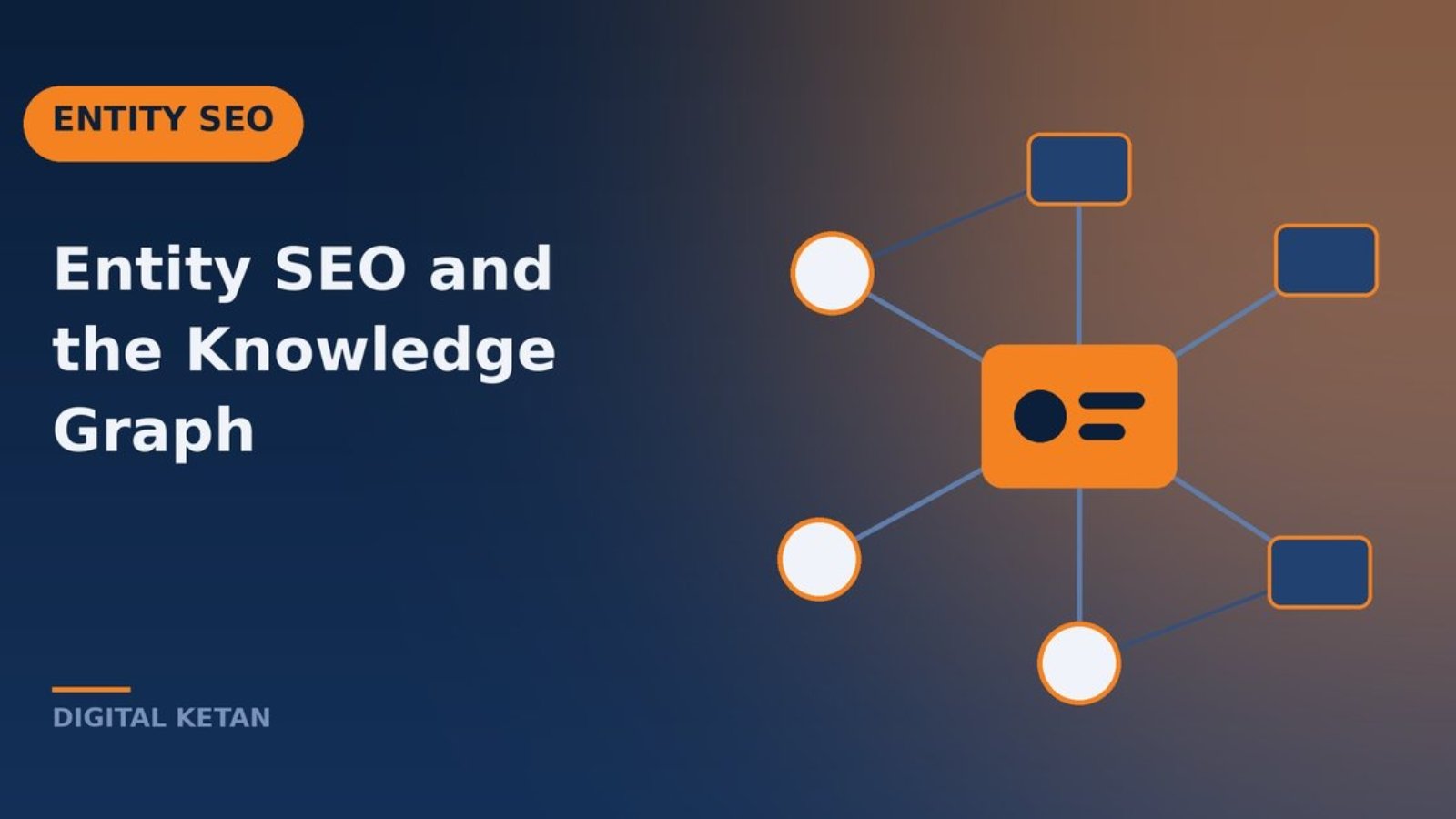
Entity SEO is the practice of helping search engines and AI systems clearly identify your business, people, products, and topics as distinct “things,” understand their attributes, and connect them correctly to related entities. Google organizes much of its understanding of the world in the Knowledge Graph, a large database of entities and the relationships between them. When your business is recognized as a well defined entity, search engines can show accurate knowledge panels, understand what your content is about, and AI assistants can describe your company correctly. Entity SEO is one of the foundations of visibility in both modern search and generative AI.
This guide is for business owners, founders, and marketers who want search engines and AI tools to understand exactly who they are and what they do. I will explain what entities and the Knowledge Graph are, why they matter in 2026, how search systems recognize entities, a step by step entity SEO strategy, how to handle knowledge panels, common mistakes, a practical example, and a checklist. Entity work sits at the heart of generative engine optimization, and it supports every other part of search visibility.
What Is an Entity?
In search, an entity is a thing or concept that is singular, unique, well defined, and distinguishable from other things. People, organizations, places, products, events, and ideas can all be entities. “Digital marketing” is an entity, as is a specific company, a named founder, a city, or a particular software product.
The important shift is from strings to things. Early search engines matched strings of text: if a page contained the words someone searched for, it was a candidate. Modern search engines try to understand what the words refer to. When someone searches “Apple revenue,” Google understands that “Apple” refers to the technology company, not the fruit, because it knows the entity and the context.
Entities have attributes and relationships. A company entity has attributes such as its name, founding date, headquarters, founders, industry, products, and official website. It has relationships with other entities: the people who lead it, the places it operates, the products it sells, and the topics it is associated with.
What Is the Knowledge Graph?
Google introduced the Knowledge Graph in 2012 as a way to organize information about entities and how they connect. It draws on many sources, including licensed data, public databases, websites, and structured data. The most visible output is the knowledge panel, the information box that often appears on the right side of desktop results or near the top on mobile when you search for a well known organization, person, or place.
The Knowledge Graph is not the only entity database that matters. Other search engines, AI companies, and data providers maintain their own. Large language models also develop an internal representation of entities from their training data. The same principles help with all of them: clear, consistent, corroborated information about who you are.
Why Does Entity SEO Matter in 2026?
Search understands meaning, not just words
Search systems increasingly match queries to entities and topics rather than exact phrases. A site that is clearly associated with specific entities, such as a service, a location, and a field of expertise, is easier to match to relevant searches.
AI assistants reason about entities
When someone asks ChatGPT, Gemini, or Perplexity about a company or asks for recommendations in a category, the system must identify which entities are relevant and what it knows about them. If your business is poorly defined, inconsistently described, or easily confused with another company, the assistant may describe you vaguely, incorrectly, or not at all. Entity clarity is therefore central to AI visibility and to efforts to get your brand mentioned in ChatGPT.
Brand searches and knowledge panels
When people search your company name, a knowledge panel with accurate information builds credibility. Incorrect or missing information creates confusion at the exact moment someone is checking you out.
Expertise and trust signals
Google’s systems look for content from sources with demonstrated expertise. Clearly connecting your content to identifiable authors and an identifiable organization, each with a consistent presence across the web, helps demonstrate that expertise.
How Search Systems Recognize Entities
Consistent information across sources
Search systems become confident about an entity when many reliable sources describe it consistently. If your website, Google Business Profile, LinkedIn page, directory listings, and press coverage all describe your company with the same name, category, location, and offerings, recognition becomes easier. Conflicting details weaken it.
Structured data
Schema.org markup provides explicit statements about entities: this organization has this name, logo, address, and these official profiles. Properties such as sameAs link your website entity to the same entity on other platforms. My schema markup guide explains implementation in detail.
Authoritative references
Mentions in trusted sources, such as reputable publications, industry associations, government registries, and well maintained knowledge bases, provide corroboration. For notable organizations and people, public knowledge bases such as Wikidata can be important sources.
Context in content
The way your content discusses topics, and the other entities it mentions, helps search systems understand what your site is about. A site that consistently and deeply covers a subject becomes associated with that subject, which is part of building topical authority.
Entity SEO Strategy: Step by Step
Step 1: Define your core entity facts
Write a short, authoritative fact sheet for your organization: official name, legal name if different, short description, category, founding date, founders or leaders, headquarters address, service areas, main products or services, official website, logo, and official social and directory profiles. This becomes the single source of truth for every profile, listing, and markup.
Step 2: Create a clear “home” for the entity on your site
Your homepage and About page should state these facts clearly in plain language. Describe what the company does, who it serves, where it operates, and who leads it. Avoid relying only on slogans. An About page that reads like a reference entry, while still being engaging, is one of the most useful entity assets you can have.
Step 3: Implement Organization structured data
Add Organization markup, or the most specific LocalBusiness subtype for local businesses, to your homepage. Include name, url, logo, description, address, contactPoint, foundingDate where relevant, and sameAs links to official profiles. Use a consistent @id so other markup, such as Article markup, can reference the same organization entity.
Step 4: Build entities for key people
Founders, executives, and expert authors are entities too. Create author or team pages with clear bios, roles, expertise, and links to their professional profiles. Add Person markup, and connect authors to their articles. This strengthens the link between your content and genuine expertise.
Step 5: Align every external profile
Update Google Business Profile, Bing Places, Apple Business Connect, LinkedIn, Crunchbase, industry directories, and review platforms so they match your fact sheet exactly. For local businesses, this overlaps heavily with citation work described in my local SEO guide.
Step 6: Earn authoritative mentions
Pursue coverage in trade publications, association listings, partner pages, and industry directories. Each credible mention that describes your company consistently adds corroboration. My link building guide covers how to earn these references properly.
Step 7: Connect your content to entities
Write content that clearly addresses specific topics and names relevant entities: the services, standards, tools, locations, and concepts your audience cares about. Clear on-page structure, as described in the on-page SEO checklist, helps search systems see those connections.
Step 8: Monitor how you are represented
Search your brand name, check for a knowledge panel, and review what appears. Ask AI assistants what they know about your company and note inaccuracies. Repeat periodically and trace any errors back to their likely source.
Entity Priorities by Business Type
The principles are the same for everyone, but the most important entities differ by business model.
Local businesses
The core entity is the business location itself. The priority is a complete Google Business Profile, matching Apple and Bing listings, consistent citations, LocalBusiness markup, and reviews. Practitioners such as doctors, lawyers, or accountants may also benefit from individual profiles that connect them to the practice.
Professional services and consultants
For consultancies, agencies, and advisory firms, people are often as important as the organization. Clients buy expertise, and that expertise belongs to named individuals. Strong author pages, speaking profiles, publications, and consistent professional bios help connect personal authority to the firm.
Product companies and SaaS
Products are entities in their own right. Each major product should have a clear page describing what it is, what category it belongs to, who it is for, and how it integrates with other tools. Consistent product naming across your site, app marketplaces, review platforms, and partner directories helps systems connect mentions to the right product.
Manufacturers and B2B suppliers
Capabilities, certifications, materials, and industries served are the attributes buyers care about. State them explicitly on indexable pages rather than only in brochures, and make sure industry directories and association listings reflect the same capabilities.
Personal brands
For founders and consultants building a personal brand, the person is the primary entity. A clear personal website or profile page, consistent bios across LinkedIn and speaker profiles, and links between the person and the businesses they run help search systems and AI assistants understand the relationship.
Knowledge Panels: What You Can and Cannot Control
Knowledge panels are generated automatically. You cannot buy one or create one directly. Google shows them when it has enough confidence about an entity, which usually requires consistent, corroborated information from multiple reliable sources.
If a knowledge panel already exists for your organization or for you as a person, you can usually claim it through Google’s verification process, which lets you suggest changes to certain information. Suggestions are reviewed and not guaranteed to be accepted, so they should be supported by accurate information on your website and other authoritative sources.
Local businesses typically see a Business Profile panel instead, which is managed directly through Google Business Profile. For most small and mid sized businesses, a complete and accurate Business Profile is the most practical form of entity presence on Google.
Be careful with public knowledge bases. Wikipedia has strict notability and conflict of interest rules, and creating or editing an article about your own company is strongly discouraged by its guidelines. Wikidata has its own policies. The better route is to earn genuine coverage that independent editors can reference.
How to Tell Whether Your Entity Is Well Understood
There is no single entity score, but several signals indicate how clearly search systems understand you. Search your brand name and check whether a knowledge panel or Business Profile appears with accurate details. Search your brand alongside your category and location, and see whether results consistently refer to your business rather than similarly named ones. Ask several AI assistants what your company does, who leads it, and where it operates, and compare the answers with your fact sheet.
Also look at how branded search volume and brand mentions change over time. Growth in both usually reflects stronger recognition. Keep a simple log of these checks every quarter, noting inaccuracies and the actions taken to correct them. Over time, the log shows whether your entity work is making your business easier to recognize.
Entity SEO vs Traditional Keyword SEO
| Aspect | Keyword focused SEO | Entity focused SEO |
|---|---|---|
| Core unit | Search phrases | Things and their relationships |
| Main question | Which words should this page target? | What is this page about, and who is behind it? |
| Key assets | Optimized pages and keywords | Consistent facts, structured data, profiles, authoritative mentions |
| Benefits | Rankings for targeted queries | Accurate brand representation, knowledge panels, AI understanding, broader relevance |
The two approaches work together. Keyword research tells you what people search for; entity SEO helps search systems understand who you are and why you are a relevant answer. The broader relationship between search disciplines is covered in SEO vs AEO vs GEO.
Common Entity SEO Mistakes
- Inconsistent names. Using different versions of your business name across platforms confuses search systems.
- Vague self descriptions. Slogans without clear statements of what you do give systems little to understand.
- Outdated profiles. Old addresses, phone numbers, or discontinued services linger across directories.
- Anonymous content. Articles without real authors miss the chance to connect expertise to people.
- Missing sameAs links. Structured data that does not connect to official profiles leaves entities isolated.
- Self editing Wikipedia. Conflict of interest edits often get reverted and can damage reputation.
- Confusable names. Businesses sharing names with other entities need extra clarity about location and category.
Entity SEO Best Practices
- Maintain a single entity fact sheet and use it everywhere.
- Describe your business plainly on the homepage and About page.
- Implement Organization or LocalBusiness markup with sameAs links and a stable @id.
- Give authors and leaders real profile pages and Person markup.
- Keep every external profile aligned and current.
- Earn consistent mentions in credible, relevant publications.
- Monitor search results and AI assistant descriptions regularly.
- Correct inaccuracies at their source rather than only on your own site.
Practical Example: An Engineering Consultancy With a Common Name
Consider an engineering consultancy called “Summit Engineering” operating in one region. This is an illustrative scenario. Several unrelated companies worldwide use the same name. When prospects searched the name, results mixed information from different companies, and when the founders asked AI assistants about “Summit Engineering,” the answers described a different firm in another country.
An entity plan would start with a precise fact sheet: full legal name, region, founding year, principal engineers, services such as structural assessment and building compliance, and professional registrations. The homepage would open with a clear statement combining the name, location, and specialty. The About page would describe the firm’s history, leadership, and accreditations in plain language.
The team would add Organization markup with the full name, address, logo, and sameAs links to the firm’s LinkedIn page, Google Business Profile, and professional association listing. Principal engineers would get profile pages with Person markup and links to their professional registrations. All directory listings would be updated to include the location and specialty alongside the name.
Over time, the firm would pursue coverage in regional construction publications and speaking opportunities at professional events, each describing the firm consistently. The realistic outcome is clearer separation from similarly named companies in search results and more accurate AI descriptions when people include the region or specialty in their questions. This mirrors a broader pattern I described in my article on recurring B2B SEO problems: expertise that exists in reality but is never stated clearly online.
Entity SEO Checklist
- Entity fact sheet created with official name, description, category, location, and leaders.
- Homepage and About page clearly state who you are and what you do.
- Organization or LocalBusiness structured data with sameAs links and stable @id.
- Author and leadership pages with Person markup.
- Google, Bing, and Apple listings complete and consistent.
- LinkedIn, industry directories, and review platforms aligned.
- Credible third party mentions pursued.
- Content clearly connected to the topics and entities you specialize in.
- Knowledge panel claimed where available.
- Brand search results and AI descriptions reviewed regularly.
Frequently Asked Questions
What is the difference between an entity and a keyword?
A keyword is a string of words people type. An entity is the real world thing those words refer to. Different keywords can refer to the same entity, and the same keyword can refer to different entities depending on context.
How do I get a knowledge panel for my business?
Knowledge panels are generated automatically when Google has enough consistent, corroborated information. Local businesses get Business Profile panels through Google Business Profile. For organizations, clear facts, structured data, aligned profiles, and credible coverage improve the chances over time.
Does schema markup create a knowledge panel?
Not by itself. Structured data helps Google understand your entity, but knowledge panels depend on confidence built from many sources.
Should I create a Wikipedia page for my company?
Wikipedia’s guidelines discourage writing about your own company and require independent notability. Focus on earning genuine coverage; if your company becomes notable, independent editors may create an article.
How does entity SEO help with AI assistants?
AI assistants need to identify which entity a question refers to and what is known about it. Clear, consistent, corroborated information reduces confusion and improves the accuracy of how your business is described.
How long does entity SEO take to show results?
Structured data and profile updates can be processed within weeks, but building strong recognition through consistent mentions usually takes several months or longer.
Conclusion
Entity SEO is about making sure search engines and AI systems know exactly who you are, what you do, and how you relate to the topics, people, and places that matter to your business. Define your core facts, state them clearly on your site, express them in structured data, align every external profile, connect your content to real experts, and earn consistent mentions from credible sources.
As search and AI increasingly reason about things rather than words, businesses with clear, well corroborated entities have a lasting advantage. It is foundational work that makes every other form of visibility more reliable.
Want Search Engines and AI to Understand Your Business?
If search results or AI assistants describe your business inaccurately, or confuse you with someone else, I can audit your entity presence and build a practical plan to clarify and strengthen it. Get in touch through DigitalKetan.com to discuss your brand visibility.